
Assess
We identify the pruning objective and evaluate structure before a saw or clipper touches the tree.
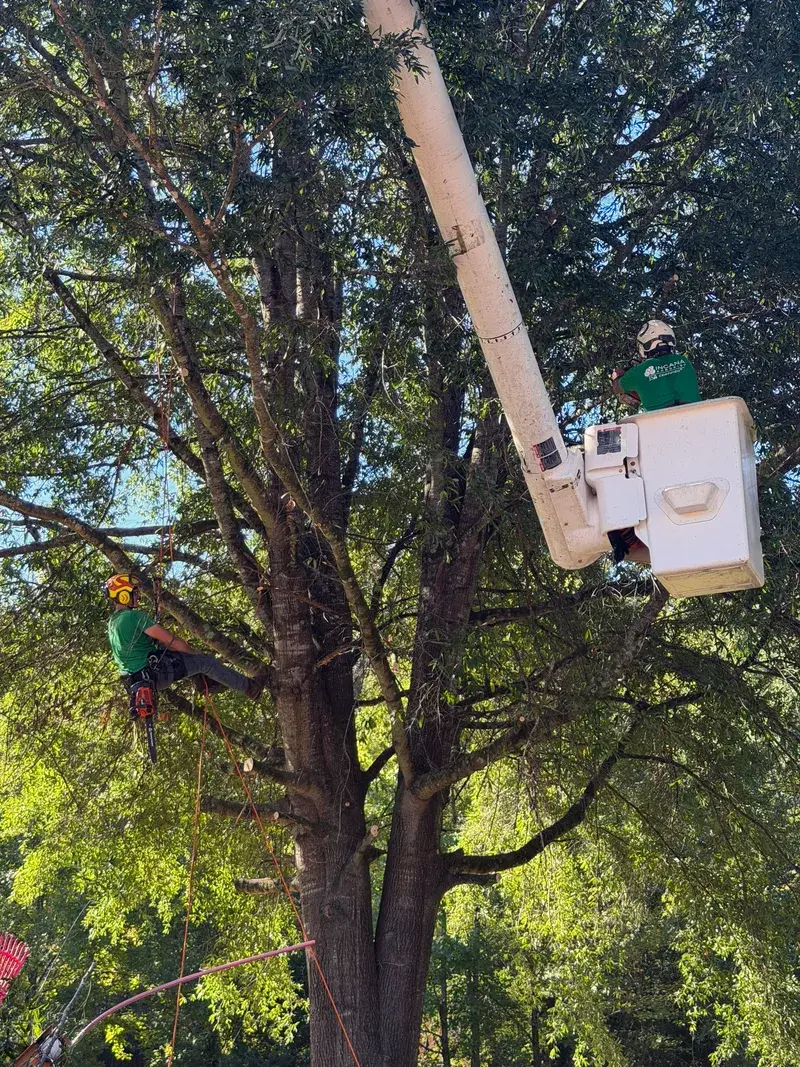
Pruning is both technical and visual. We consider branch structure, species response, age, season, and the tree's relationship to homes, walkways, and other landscape features. The goal is a safer, healthier canopy that still looks unmistakably like itself.
We identify the pruning objective and evaluate structure before a saw or clipper touches the tree.
Only branches that serve the agreed goal are chosen, with careful attention to cut size and placement.
We review canopy balance and clean the site so the finished work feels natural and composed.
The terms are often used interchangeably, but professional pruning focuses on specific goals such as structure, clearance, health, or risk reduction rather than simply cutting back growth.
Timing depends on the species and pruning objective. Dormant-season pruning is often appropriate, while dead, broken, or hazardous branches may need attention as soon as they are discovered.
Yes. We evaluate clearance, branch structure, access, and nearby targets, then use selective cuts and controlled work practices to protect the tree and surrounding property.
There is no universal schedule. Pruning frequency depends on the species, age, condition, location, and goals for the tree. Periodic inspections help determine when work is genuinely beneficial.
Tell us what you are noticing and what you need from the space. We will recommend an appropriate scope and timing for the tree.