
Observe
We examine the tree's canopy, trunk, roots, site conditions, and history to understand the full picture.
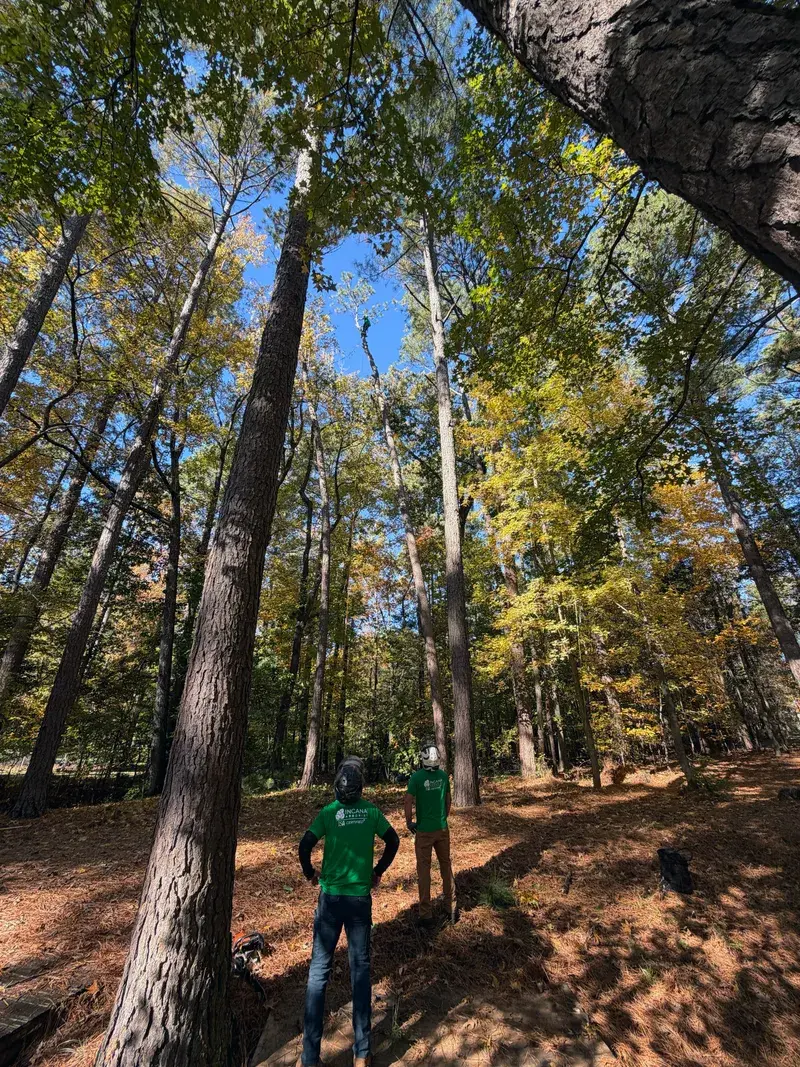
Tree health is rarely about one symptom in isolation. Soil, water, structure, species, pests, and changes to the site all play a role. As your local tree care specialists, our job starts with understanding those relationships, then prioritizing the work that will make a meaningful difference.
We examine the tree's canopy, trunk, roots, site conditions, and history to understand the full picture.
Recommendations are organized around safety, tree health, your goals, and what is realistically beneficial.
We favor measured interventions and ongoing observation over unnecessary work or quick fixes.
Call when you notice canopy thinning, unusual leaf color, decay, root damage, storm damage, or a change in how a tree stands. An assessment is also useful before construction or when planning care for mature trees.
Yes. We evaluate visible defects, site conditions, potential targets, and the likelihood and consequences of failure, then explain practical options for managing the risk.
Sometimes. The right recommendation depends on the cause, severity, species, site, and level of risk. We prioritize useful interventions and will explain when preservation is—or is not—realistic.
Yes. Early planning can reduce damage to trunks, roots, and soil around important trees. We can evaluate the site, identify appropriate protection zones, and recommend practical steps before work begins.
Whether something looks wrong or you simply want a plan for mature trees, a conversation with a Certified Arborist is a good place to begin.